
 lead-capture
How to Build a Personal Brand at Networking Events
Build a personal brand at networking events by becoming known for one useful problem you understand, communicating it clearly, and following through with relevant help. Use your digital business card and event notes to make the connection easy to remember, then give value before asking for more time.
How to Build a Personal Brand at Networking Events
The strongest personal brand at a networking event is not the loudest introduction or the most polished slogan. It is a clear reputation for being useful. People should leave a conversation knowing what you care about, who you help, and what kind of resource you can be when the right problem comes up.
Personal branding at events becomes much easier when you treat it as a promise, not a performance. Choose a few ideas you want to be known for, make those ideas visible in how you introduce yourself and help people, then follow through after the room clears.
What does personal branding mean at a networking event?
Personal branding is the set of expectations people form about your expertise, character, and usefulness. At an event, it is built through small signals: how clearly you explain your work, what questions you ask, what you remember, and whether your follow-up matches the conversation.
You do not need to present yourself as an expert on everything. A more believable brand is specific. You might be the person who helps local service businesses improve their referrals, the consultant who makes complicated operations easier to understand, or the creative professional who connects people to the right collaborators.
I think of a personal brand as three connected answers:
- What do I know well? Choose a practical subject you can discuss without reaching for jargon.
- Who benefits from that knowledge? Be clear about the people, roles, or situations you understand.
- How do I make an introduction more useful? Offer an insight, resource, question, or connection instead of waiting for a sales opening.
That clarity gives people something memorable to repeat when they describe you to someone else.
How do you choose what to be known for?
Start with the overlap between your experience, your energy, and a problem other people actually have. A topic is more sustainable when you have real examples to share and still want to talk about it after the tenth conversation.
Write one sentence using this structure: “I help [specific people] make progress on [specific problem] by [your useful approach].” It does not need to be your final tagline. It is a filter for deciding which conversations, events, and content fit your reputation.
Avoid choosing a brand based only on what sounds impressive. “Business strategist” is broad enough to be forgettable. “I help independent contractors turn one-time jobs into repeat and referral business” gives someone a clearer reason to remember you.
Your focus can evolve. You are not signing a permanent contract with one niche. You are creating enough consistency that people know when to think of you.
How should you introduce yourself without sounding rehearsed?
Lead with the problem you like helping with, then ask the other person about their work. A good introduction is short enough to leave room for a real conversation.
Try this pattern:
“I'm [name]. I work with [people or type of business] on [specific problem]. Lately I've been thinking about [useful topic]. What brings you to this event?”
The last question matters. A personal brand is not a monologue about you. It is a starting point for learning what the other person needs and whether your experience is relevant.
If someone asks a broad question such as “What do you do?”, do not rush to list every service. Give one clear example. “I help wedding vendors make it easier for referrals to turn into conversations” is more inviting than a catalog of capabilities.
A digital business card can support that introduction by giving people one place to find your contact details, profile, and relevant links. If you also want a simple way to continue the connection, see how digital business cards capture leads. The card should reinforce your message, not replace the conversation.
What should your personal brand look like on a digital business card?
Keep the card focused on recognition and the next useful action. Include your name, role or positioning, a clear photo or visual identity, contact options, and one or two links that help someone understand your work.
Your headline should answer the question, “Why would I want to hear from this person again?” A vague title makes the visitor do all the interpretation. A specific phrase gives the relationship somewhere to go.
If you use a QR code or shared link at an event, test the experience before you arrive. Make sure the page loads quickly, the most important information appears first, and the visitor can save your details without hunting through a crowded menu. A polished brand that creates friction is still a poor introduction.
Do not copy a competitor's layout just because it looks familiar. Linq, HiHello, Popl, and Blinq each offer ways to present digital contact information, but the platform matters less than the clarity of your message and the usefulness of the destination. Compare tools by asking whether the experience helps people remember you and continue the right conversation.
How can you be memorable without dominating the room?
Be specific, observant, and generous. People remember a useful comment connected to their situation more than a repeated slogan.
Ask questions that show you are listening:
- What are you hoping to learn or solve at this event?
- What kind of work has been taking most of your attention lately?
- What is changing for your customers or team right now?
- Is there someone you are hoping to meet here?
When you hear a problem you understand, contribute one relevant thought. It might be a resource, a warning about a common mistake, a practical question, or an introduction to someone who can help. Do not turn every answer into a disguised pitch. Give the person enough value to make the conversation worthwhile even if nothing is sold.
At a busy event, I would rather be remembered as the person who made one useful connection than as the person who handed out the most cards. Volume can make a room feel productive while leaving no real relationship behind.
What did covering sports teach me about event visibility?
When I worked with CBS MaxPreps, I covered high school sports across the East Coast and Midwest. The work moved quickly. On a Friday night, I might be coordinating with local publications, meeting community figures on the field, and trying to remember which person represented which school while cameras, players, and schedules kept moving around me.
That experience taught me that context is part of a personal brand. A contact is easier to remember when you can place the person, location, role, and reason you met. In a networking event, a note such as “school athletics director, looking for local coverage partners” is far more useful than “met at event.”
I also learned that visibility is not the same as recognition. Being present in a lot of places does not automatically make your work memorable. People remember the contribution and the consistency. If you show up with a clear role, treat people well under pressure, and follow through on what you say, the reputation travels with you.
What can networking professionals learn from Tom Brady at UNBOUND 2026?
In HubSpot's UNBOUND 2026 conversation, “What Winning at Scale Actually Requires”, Tom Brady discussed the discipline behind sustained performance. Two lessons apply to a personal brand at events without pretending a networking room is a championship game.
First, practice the ordinary interactions before the high-stakes ones. Brady's emphasis on treating practice seriously is a useful reminder to test your introduction, check your QR card, and rehearse how you explain what you do. When an important prospect or collaborator appears unexpectedly, you can focus on listening instead of searching for the right words.
Second, focus on what you can control: your preparation, attitude, and follow-through. You cannot control whether someone hires you or remembers your name. You can control whether you asked a good question, recorded their context with permission, and delivered the useful thing you promised. Repeated actions give a personal brand substance beyond a polished profile.
Watch the full Tom Brady conversation on HubSpot Live:
How do you turn an event conversation into a lasting reputation?
Follow up with the detail that proves you were paying attention. Mention the problem they described, send the resource you promised, or make the introduction you offered. Do not send a generic message that forces the other person to reconstruct the conversation.
A useful first follow-up can be simple:
“Good meeting you at [event]. You mentioned [specific challenge]. I found the [resource or introduction] I had in mind, so I wanted to send it over. Hope it helps with [relevant goal].”
If there is no immediate action, record the context and choose a realistic time to reconnect. How to build a follow-up system that actually works covers the broader process. The important point here is that your follow-up should confirm the brand you presented in person. If you said you are thoughtful and useful, act that way in the next message.
A follow-up system can also help you avoid confusing activity with relationship building. Sending a message is not the same as creating progress. A reply, useful exchange, accepted introduction, or clear decision is better evidence that the connection is moving somewhere.
Should you use the same personal brand at every event?
Keep your core promise consistent, but adapt the example to the room. A personal brand should be recognizable without becoming a script.
At a small business breakfast, you might talk about referrals and repeat customers. At a creative industry event, you might emphasize collaboration and project clarity. At a professional association meeting, you might share a lesson from your field. The underlying reputation can stay the same while the language becomes relevant to the people in front of you.
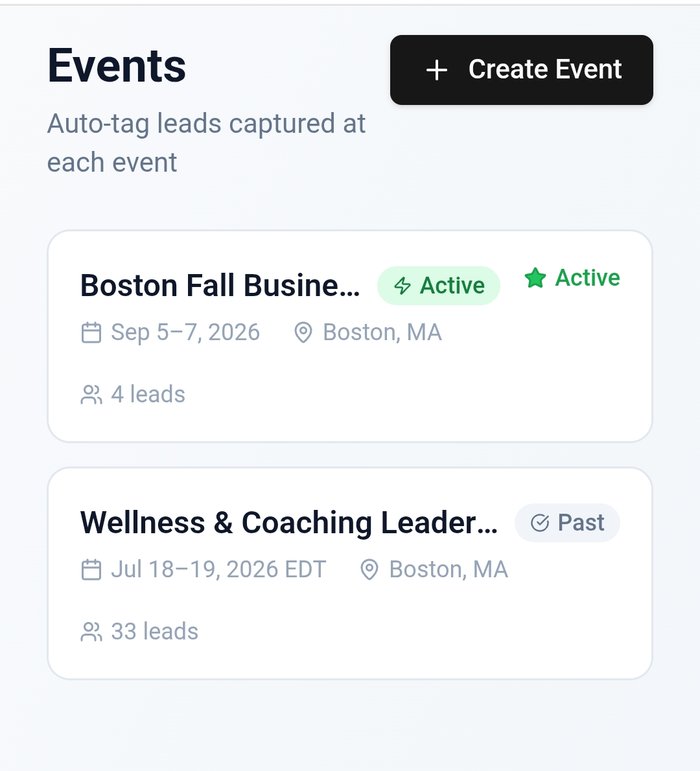
This is also why a single generic card or profile can underperform. If you attend different kinds of events, consider whether the page you share gives enough context for that audience. My MASH Card supports sharing by link or QR code, so the practical goal is to make the destination clear and useful wherever the conversation begins.
What personal branding mistakes should you avoid?
The most common mistakes are not dramatic. They are small inconsistencies that make the relationship harder to continue:
- Trying to appeal to everyone. Broad claims are easy to ignore.
- Making the conversation entirely about yourself. A personal brand grows through relevance, not airtime.
- Using a title with no proof behind it. Share examples and lessons, not inflated labels.
- Collecting contacts without context. A list of names will not remind you why the connection mattered.
- Promising follow-up you will not deliver. Reliability is part of your brand.
- Asking for too much too soon. Give a useful resource, answer, or introduction before requesting a meeting.
- Changing your message at every event. Adapt the example, not your entire identity.
The fastest way to weaken a reputation is to make a strong promise in person and then send an impersonal sales sequence. People notice the gap.
How do you measure whether your event personal brand is working?
Look for evidence of recognition and useful continuation, not just the number of contacts collected. Track which conversations lead to replies, introductions, invitations, referrals, or people mentioning your work to others.
After each event, ask yourself:
- What did people ask me about more than once?
- Which explanation made someone lean in or share a related problem?
- What useful promise did I make, and did I keep it?
- Which connections deserve a thoughtful next step?
- What should I explain more clearly next time?
You can use a spreadsheet, a CRM, or a digital business card system with event context. The tool should make reflection easier, not turn networking into a scoreboard. If you are regularly forgetting who you met or what you offered, how to track and manage your networking leads effectively has a practical structure for fixing that gap.
A personal brand at networking events is built one remembered conversation at a time. Be clear about what you help with, listen for a real need, offer something useful, and make your next action match your words. That is how people come to know you for something worth remembering.
What should you do?
- Best for
- Professionals, consultants, service businesses, creators, and community builders who want event conversations to become useful relationships.
- Use this when
- Use this approach when you want to become more memorable, relevant, and trusted at networking events without turning every conversation into a sales pitch.
- Avoid if
- Avoid broad claims, self-focused introductions, generic follow-up, collecting contacts without context, and promising more than you can deliver.
- Alternatives
- A personal website, LinkedIn profile, or niche content series can reinforce your reputation between events, while a CRM or spreadsheet can help manage event contacts and follow-up.
Stop letting connections go cold
My MASH Card captures who you meet, remembers the context, and helps you follow up before the opportunity disappears.


