
 lead-capture
How to Capture Leads at Networking Events (Without Losing Contacts)
Most lead capture at networking events fails because the system captures contact info but loses the context that made the lead worth following up on. The fix isn't a better scanner or a bigger stack of cards — it's capturing who you met, where you met, and what you talked about in one step, so the follow-up writes itself. MY MASH Card does this with QR code and link sharing that captures the other person's info back to you, automatically logs the event and date, and lets you add notes so every lead is actually follow-up-able.
How to Capture Leads at Networking Events (Without Losing Contacts)
Most lead capture at networking events fails for the same reason: you get the contact info but lose the context. A name and email sitting in a spreadsheet or a badge scanner tells you nothing about why you should follow up, what you talked about, or whether this person is actually worth your time. By the time you sit down to write the follow-up email, you are staring at a stranger.
The fix is not a better scanner or a bigger stack of cards. It is capturing who you met, where you met, and what you talked about, all in one step, at the moment you met them, so the follow-up practically writes itself. That is the idea behind a digital business card with lead capture.
Why most lead capture at events doesn't work
Events represent a major investment, and the stakes are high. Data published by mvpvisuals shows that 93% of trade-show attendees view events as important to their purchasing journey. Yet according to research cited by never-drop, a staggering 80% of trade-show leads receive no follow-up at all.
At an estimated $150 to $500 per B2B trade-show lead, as noted by never-drop, losing contact information or failing to follow up can turn a costly event into a missed opportunity. This waste happens even though exhibitors typically convert about 20% of event leads into customers within six months when leads are managed effectively, according to theconsultancygroup.
I learned this the hard way. At HapYak, I worked trade show booths in a director of sales and marketing role. We had electronic scanners, the kind where you scan someone's badge and their name and email pop up on a screen. It felt efficient. You would scan 40, 50, 80 people in a day and feel like you had had a great event.
Then you would get back to the office, export the list, and realize the problem. You had 80 names and 80 email addresses. What you did not have was a single note about what any of them actually cared about. One person spent twenty minutes asking about our interactive video platform. Another just wanted the free t-shirt. The scanner did not know the difference. It treated every badge tap the same.
So you would sit there with 80 contacts and try to write personalized follow-ups to people you could not tell apart. Most of them got a generic email. Most of those got ignored. The leads were not bad. The capture was. We got the contact info and lost the conversation.
What should you capture when you meet someone at an event?
The minimum viable lead capture at a networking event is three things:
- Who they are: name, email, phone, company, role
- Where you met: the event name, the context (booth, panel, bar, hallway)
- What you talked about: the specific thing that made you want to stay in touch
The third one is where every system I had used before fell apart. Badge scanners get the first. Business cards get the first. A Notes app on your phone gets the third but loses the connection to the first. Nothing I had used tied all three together in one step.
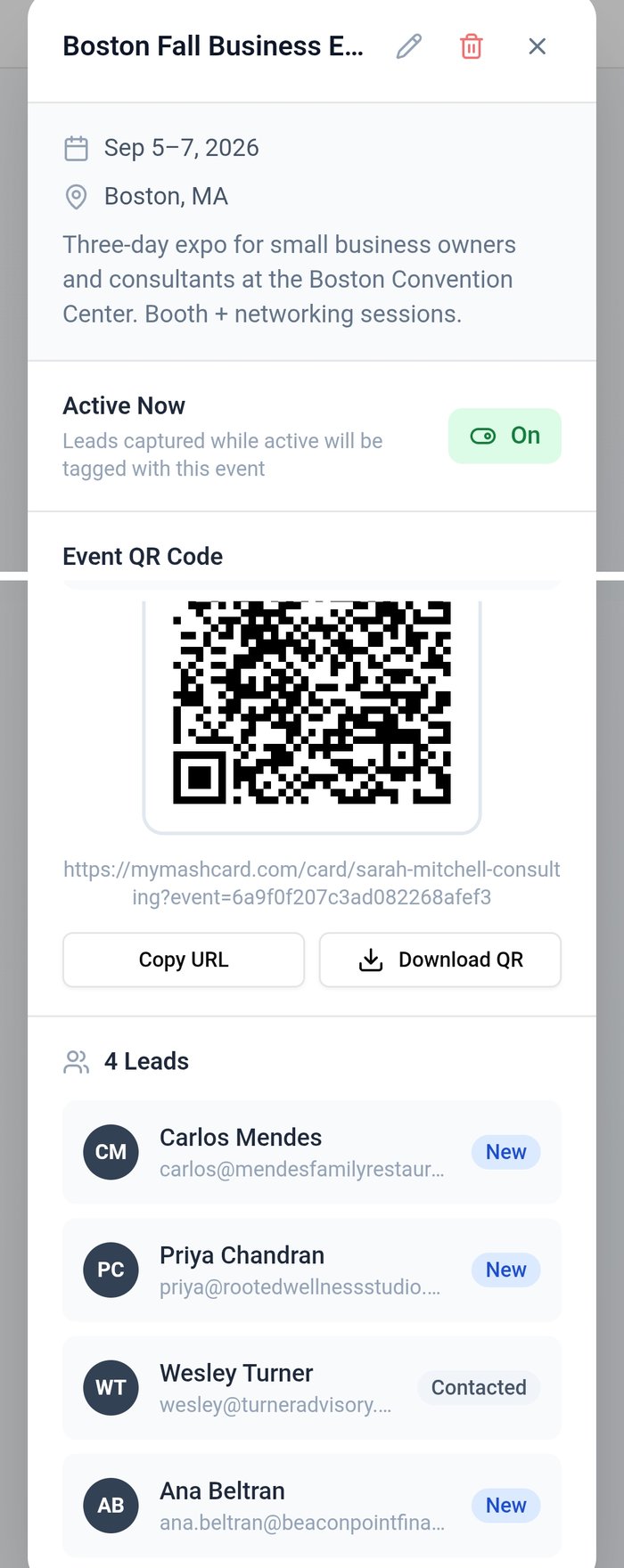
That is the gap MY MASH Card was built to fill. When someone views your card, by scanning your QR code or opening your card link, they can share their contact info back to you. That info gets saved as a lead, automatically tagged with which card they viewed and when. You add where you met and a note about the conversation, and the lead is complete. Name, context, and conversation, captured in the moment, not reconstructed from memory three days later.
How do you capture leads at a trade show or conference?
Trade shows are the highest-volume, highest-chaos networking environment most people encounter. Here is a process that actually works:
1. Have your card ready before the event. Set up your MY MASH Card with your current info, photo, title, and links. Turn on the QR code display so someone can scan it right off your phone screen. Test it: open the QR code, scan it with another phone, make sure your card loads.
2. Share your card, not a paper card. When you meet someone worth staying in touch with, show them your QR code or send them your card link. MASH Card supports QR code and link sharing only, so you do not need special NFC hardware. They open it, see your info, and can save it to your phone with one tap. No typing, no app download on their end.
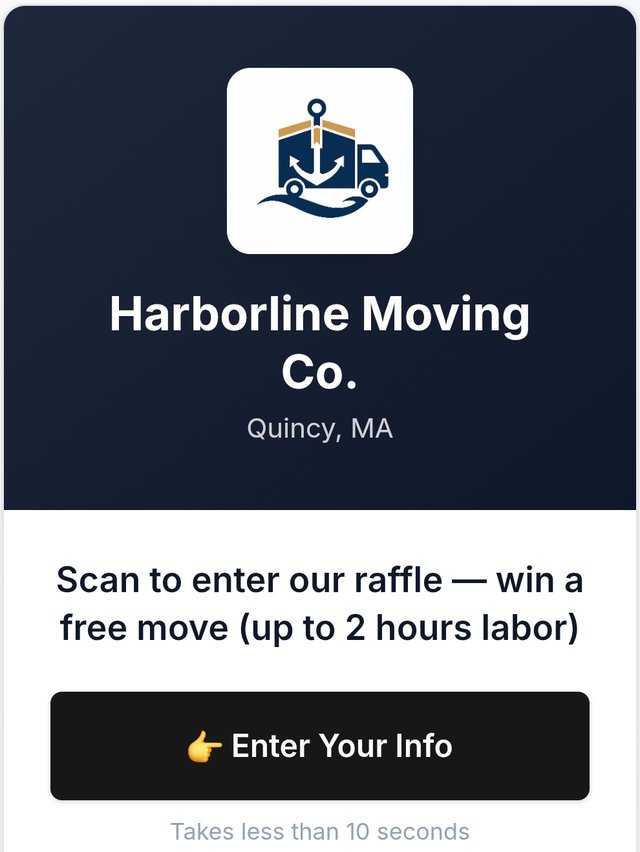
3. Capture their info back. This is the part most digital business card apps skip. When someone views your MASH Card, they can opt to share their own contact info with you. That info becomes a lead, automatically logged with the date and which card they viewed. You are not just sharing your info; you are capturing theirs.
4. Add context immediately. The moment the conversation ends, not at the end of the day, not tomorrow, add a note. Where you met (the event name, your booth, the breakout session). What you talked about (the specific thing, not a generic 'seemed interested'). This takes 30 seconds and it is the difference between a follow-able lead and a dead name.
5. Tag the event. MY MASH Card lets you tag leads with the event where you met them. Later, you can filter by event, see everyone you met at a specific conference, and follow up in batch, but with the context you captured for each individual person.
What's the difference between lead capture and contact sharing?
This is the distinction that matters. Contact sharing is you giving someone your info. Lead capture is you getting theirs, with context. Most digital business card apps are built for sharing. You show your card, they save your contact, you walk away. That is not lead capture. That is a digital version of handing someone a paper card and hoping they call you.
Lead capture means the exchange goes both ways. They get your info. You get theirs. And you get it with the metadata that makes follow-up possible: when, where, and why. If you are comparing tools for your team, see our guide on the best digital business card for sales reps.
If your 'networking system' is a one-way street (you share, they save, you hope), you are not capturing leads. You are broadcasting. Broadcasting does not fill a pipeline.
How do you follow up with leads from a networking event?
Capturing the lead is step one. Following up is where most people fail, not because they do not want to, but because the leads they captured are not follow-up-able. If your follow-up sounds generic, it's usually because your capture was generic. The fix happens at the moment of capture, not at the keyboard three days later.
With MY MASH Card, each lead has the context you captured: where you met, what you talked about, when it happened. The follow-up writes itself because you already have the material: 'Hey [name], great talking at [event] about [specific thing]. I was thinking about what you said re: [detail]...' That is a real email. It does not feel like a form letter because it is not one.
The question of whether to automate that follow-up is worth thinking about. For leads from a real conversation (a handshake, a booth visit, a chat at a panel), the first message should come from you, not a sequence. The system can remind you. It can draft something based on the context you captured. But the actual send should pass through you, because the detail that makes a follow-up land is something the system cannot capture. That is a person reading the draft and adding the one thing only they would remember.
What tools do you need to capture leads at networking events?
You need something that does three things in one step:
- Shares your contact info: QR code or link, no app download required for them
- Captures their contact info back: not just one-way sharing
- Logs the context: event, date, notes, all attached to the contact record
A badge scanner does #1 (sort of) but not #2 or #3. A paper card does #1 (sort of) and nothing else. A Notes app does #3 but not #1 or #2. A spreadsheet does #2 (if you type it all in) but nothing else.
MY MASH Card does all three. Your card is the sharing mechanism (QR code or link). The lead capture is built in, they share their info back to you when they view your card. The event tagging and notes fields give you the context layer. It is one system, not three tools duct-taped together.
How many leads should you capture at an event?
Fewer than you think. Eighty badge scans at a trade show sounds impressive until you realize you cannot tell any of them apart. Twenty leads with names, context, and notes are worth more than eighty names with nothing.
The goal is not volume. It is follow-ability. A lead you can follow up with, because you remember the conversation, because the context is in the system, is worth ten that you cannot. Capture fewer. Capture better. Follow up on all of them.
What happens to leads after the event?
This is where the system you used to capture leads matters most. If your leads are in a badge scanner export, they are in a spreadsheet that sits in a folder. If they are on paper cards, they are in a pocket or a desk drawer. If they are in MY MASH Card, they are in a system with follow-up status, next steps, and the context you captured, all attached to the contact record. For more on organizing these contacts, check out how to track digital business card leads.
The lead goes from 'person I met' to 'person I am following up with' to 'person I have a relationship with', without ever leaving the system where you captured them.
That is the point. Not just capturing leads, but having them in a place where following up is the obvious next step, not an afterthought.
The bottom line on lead capture at networking events
The problem is not that people do not meet enough potential clients at events. They meet plenty. The problem is that the system between meeting someone and following up with them is broken, or does not exist.
Contact info without context is a dead lead. Context without contact info is a memory that fades. You need both, captured together, at the moment you met.
That is what MY MASH Card does. Not a better business card. A lead capture system that happens to start with a digital business card.
Start capturing leads at your next event. Create your free MASH Card.
What should you do?
- Best for
- Professionals who want to walk out of every event with leads that are actually follow-up-able — not just a pile of names they can't tell apart three days later.
- Use this when
- Any time you meet potential clients or partners at events, trade shows, conferences, or casual networking settings where exchanging contact info makes sense.
- Avoid if
- Capturing contact info without any note about the conversation. A name and email with no context is a dead lead by the time you sit down to follow up. Also avoid capturing for volume — 20 leads with context beat 80 names without.
- Alternatives
- Badge scanners capture name and email but no conversation context. Paper business cards share your info but don't capture theirs. A Notes app captures context but isn't connected to the contact record.
Stop letting connections go cold
My MASH Card captures who you meet, remembers the context, and helps you follow up before the opportunity disappears.


