digital-business-cards
Why Paper Business Cards Are Dead (And What Replaced Them)
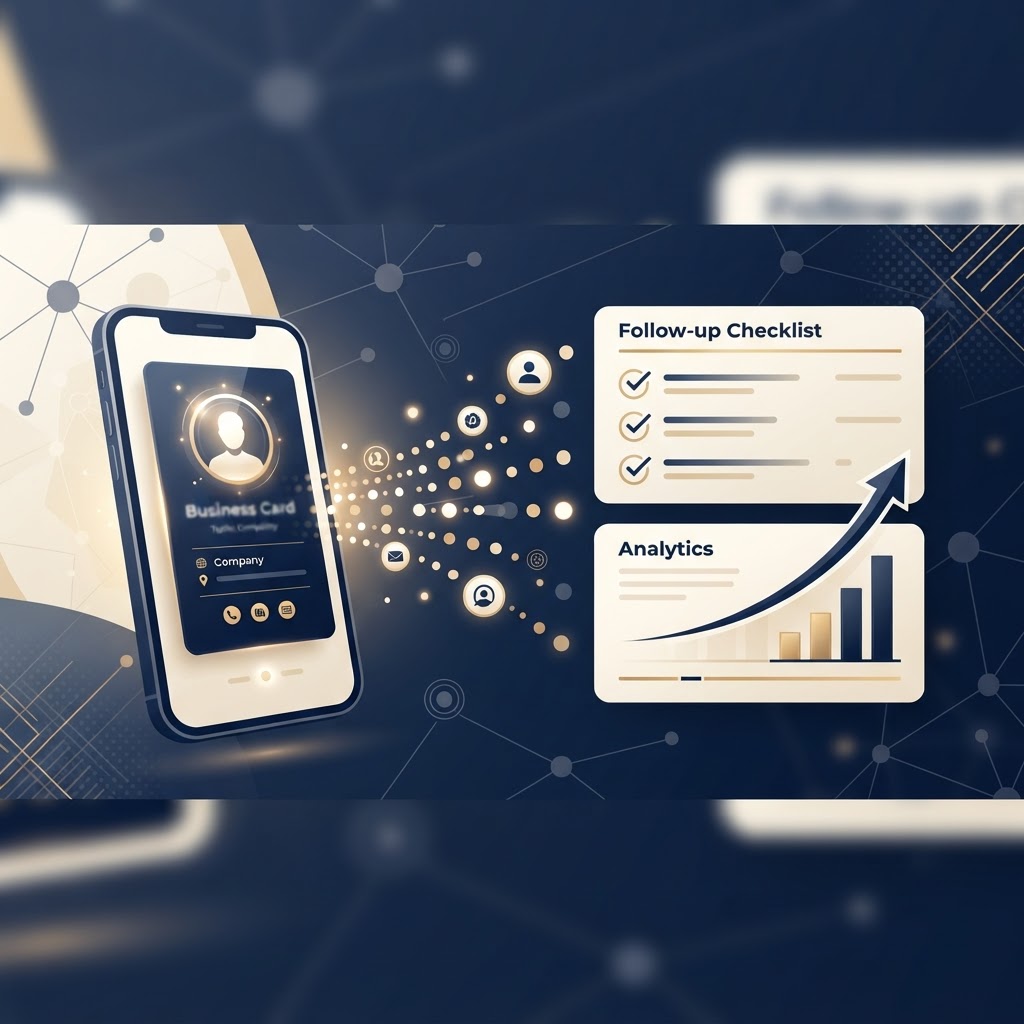
Paper business cards are dead because they only share your info one way — they capture nothing back. Digital business cards replace them by sharing contact info via QR code, automatically capturing the other person's details, and keeping the context for follow-up. That turns a discarded card into a tracked lead.
Why Paper Business Cards Are Dead (And What Replaced Them)
Paper business cards are dead. Not metaphorically, literally dead. The numbers prove it.
A widely circulated estimate suggests 88% of paper business cards are thrown away within one week (digitalbusinesscard). Industry reporting suggests paper card printing volumes declined significantly post-pandemic (digitalbusinesscard). And yet, millions of professionals still order them by the thousands, hand them out at conferences, and wonder why nobody follows up.
I saw this exact failure mode play out when working at Operation HOPE's Medford location. Workshop attendees would write their contact details down on paper pads. When I sat down to follow up, half the information was completely unusable: illegible handwriting, missing digits in phone numbers, or mistyped email addresses that bounced. These were people who genuinely wanted help, but paper-based contact collection ruined the connection before it even started. Paper business cards fail for the exact same reason: physical paper leads to lost, broken, and unusable data.
The problem isn't the card itself. The problem is what happens after the handoff. Paper cards are black holes for follow-up. They get dropped in a jacket pocket, photographed and forgotten, or left on a table at the airport. The person who gave you their card doesn't know you received it. You don't know if they received yours. No data is captured. No context is retained. No follow-up happens.
Digital business cards fixed this problem. And now they're eating paper's lunch.
The Paper Business Card Paradox
Here's the weird part: paper cards are worse at their own job than they've ever been.
A business card's entire purpose is to enable follow-up. You hand it over so the other person has your contact info. They hand over theirs so you do. Simple, right?
Except that mechanism broke. By 2025, an estimated 37% of businesses had switched to digital cards, up from 16% in 2020 (digitalbusinesscard). Reports indicate daily business card printing fell from roughly 27 million to under 8 million (digitalbusinesscard). That's not a dip. That's a cliff.
Why? Because nobody remembers getting your card. And you don't know if they got theirs.
What Replaced Paper Business Cards
Three things filled the vacuum:
1. Digital Business Cards (QR Code + Link Sharing)
A digital business card is a webpage or app profile that lives behind a QR code or link. If you are new to the concept, understanding what is a digital business card is a great starting point. You display the QR code. Someone scans it with their phone's native camera: no app needed. They see your card, and if the system is built right, they enter their info and you get a notification.
This is what MY MASH Card does. Display your code or share your link. People scan or click. You get their details. Context is captured. Follow-up is automatic. Note that MY MASH Card supports QR code and link sharing only, avoiding NFC hardware entirely so it works across 100% of devices without extra gear.
QR code adoption surged, with one report estimating global scans rose 57% year over year across 50 countries and forecasting more than 1 trillion scans worldwide in 2025 (wavecnct). People know how to scan now. It's faster than typing an email address. It's more reliable than asking someone to find you on LinkedIn later.
2. NFC Smart Cards (Tap + Auto-Share)
NFC stands for Near Field Communication. You tap a chip-enabled card against someone's phone, and your contact info autoshares to their device.
Brands like Popl and Linq pioneered this. They're slick, feel premium, and work great, if everyone you meet has an iPhone that supports NFC. Which they don't. NFC adoption stalled because it's hardware-dependent and only works on certain devices. A card that works on 80% of phones isn't actually a solution in a diverse professional environment. That is why MY MASH Card focuses on QR codes and web links rather than NFC hardware.
3. Mobile-First Business Card Apps (HiHello, Blinq)
Apps like HiHello and Blinq became the LinkedIn of business cards. You create a profile, add your details, and share your profile link via text, email, or QR code. People add you. You stay in their contacts app forever.
This works. The barrier is user education: people have to download and use the app. It adds friction that QR codes don't have.
Why Paper Lost
Here's what killed paper cards:
Discoverability died. You can't Google someone's paper card. You can't find it in your phone later. You have to physically hold on to a physical object to remember who they are.
Follow-up became intentional, not automatic. With paper, you have to manually type someone's email or look them up. With digital, their info is already captured in your system if they scanned your QR code.
Context disappeared. If someone hands you a paper card at an open house on Sunday, and they email you Wednesday, you have no record of where you met them, what they were interested in, or what you discussed. Digital cards capture all of that.
Environmental and cost factors added up. Printing 1,000 cards costs money and paper. Digital cards are zero marginal cost after setup.
The shift is real. One 2026 projection values the global digital business card market at $440 million, rising to $920 million by 2035 (businessresearchinsights). Paper printing is in decline.
Paper Cards Aren't Totally Dead: They're Just Niche
Some industries still use paper. High-end consulting, luxury brands, and people who want the tactile experience of handing over something physical still print them.
But as a business development tool? Paper is done.
The professionals who are closing deals, capturing leads, and following up effectively are using digital systems. They're displaying QR codes at open houses, conferences, and networking events. They're capturing leads in real time. They're getting follow-up context automatically. Learning how to create a digital business card takes only a few minutes.
What This Means for You
If you're still ordering boxes of paper cards, consider this: What happens when someone scans your QR code? Does their info get captured? Do you get notified? Or does it just link to your website and send them away?
If you want to see exactly how your paper card spend compares to a digital alternative, try our ROI calculator — it lays out the real costs side by side.
There's a difference between having a digital card and having a digital card system that actually captures leads.
The real win of digital isn't that it's tech-forward or trendy. It's that it closes the loop. You meet someone. They scan your code. You get their contact info. You know who to follow up with and why.
That's the opposite of paper cards, which break the loop the moment they leave your hand.
Want to learn more about capturing leads at networking events? Check out our guides on how to capture leads at networking events and the right way to follow up after networking.
Stop losing contacts to paper. Create your free MASH Card.
What should you do?
- Best for
- Anyone who networks, attends events, or meets new prospects and wants to capture leads instead of handing out disposable cards
- Use this when
- Switch from paper cards to a digital business card when you want to capture leads, keep context, and follow up — not just share contact info
- Avoid if
- Any card — paper or digital — that only shares your info without capturing the other person's details back
- Alternatives
- Popl and Linq offer NFC-based cards (hardware dependent, cost more, don't work on all phones). HiHello and Blinq offer digital cards but focus on sharing, not lead capture + follow-up. LinkedIn works for existing connections but not new ones at events.
Stop letting connections go cold
My MASH Card captures who you meet, remembers the context, and helps you follow up before the opportunity disappears.