
 follow-up
How to Turn Networking Contacts Into Paying Clients
To turn networking contacts into paying clients, lead with value: capture the context of the conversation, follow up within 24 to 48 hours with something genuinely useful instead of a pitch, and assign every qualified contact a clear next step in your pipeline. A digital business card can simplify QR code or link sharing, but consistent notes, real interest in the person, and helpful follow-up are what move the relationship forward.
How to Turn Networking Contacts Into Paying Clients
Meeting someone at a networking event is not the same as creating a client opportunity. The conversation is only the beginning. To turn networking contacts into paying clients, capture the right context, follow up while the conversation is still fresh, and move qualified contacts into a simple pipeline where you can keep your promises. The goal is not to send more generic messages. It is to make the next useful conversation obvious. A digital business card with follow-up keeps every contact visible with enough context to make that next conversation natural. And the fastest way to earn a client is to be genuinely useful before you ever ask for anything.
I learned this the hard way through AdamHelper, my moving and labor service. Customers would sometimes text weeks after a quote, and I had to reconstruct what we discussed from memory. I also met real estate agents through customer moves, exchanged cards, and then watched perfectly good referral opportunities disappear because neither of us had a reliable follow-up habit. The problem was not a lack of conversations. It was a broken handoff between the conversation and the next step.
What is the fastest way to turn a networking contact into a client?
Capture the contact with a specific note, send a relevant follow-up within a day or two, and give the relationship a clear next step. A useful system records who the person is, what they care about, what you offered, and when you will follow up. That turns a vague networking contact into a manageable opportunity. But capture is only the entry point. The contacts who eventually become clients are the ones you helped first: you shared a resource they needed, made an introduction, or answered a question honestly even when it did not lead to a sale.
A digital business card can help with the first part because it gives people a link or QR code to your contact information and lead capture flow. My MASH Card supports QR code and link sharing, not NFC hardware. The important part is not the novelty of the card. It is connecting the exchange to context you can act on later.
Why do most networking contacts never become clients?
Most contacts stall for one of three reasons: there is no context, the follow-up is generic, or nobody owns the next action.
A name and email address are not enough. When you return from an event with twenty new contacts, you may remember that someone was interested in your service, but not which service, why they cared, or what you promised to send. By the time you reach out, your message sounds like every other “great meeting you” email in their inbox.
The fix is to record one sentence immediately after the conversation. Try a note like: “Runs a three-agent real estate team, wants a cleaner way to refer movers to buyers, send sample card and referral workflow.” That sentence gives you a reason to follow up and a useful opening line.
What should you capture when you meet someone?
Capture the minimum information that will make your next message personal and useful:
- Their name, company, role, and preferred contact method
- The problem, project, or goal they mentioned
- The specific next step you offered, including any promised resource
- A follow-up date and a simple relationship or opportunity label
You do not need to write a transcript. You need enough detail to recognize the person and continue the conversation without making them repeat themselves.
At a busy event, speed matters. A QR code on your digital business card can let a contact open your information without waiting while you type everything into their phone. If your flow includes a lead form, make the request short and explain what happens next. “I will send the sample we discussed tomorrow” is much stronger than a vague request to join a list.
How soon should you follow up after networking?
Follow up within 24 to 48 hours when there is a real next step. That timing is soon enough for the conversation to be memorable and late enough that you can send something thoughtful instead of a rushed template.
Your first message should do four things: remind the person where you met, repeat the relevant detail they shared, complete the promise you made, and give them something useful before you ask for anything. For example:
Hi Maya, it was good meeting you at the local business mixer. You mentioned that your team is trying to make buyer referrals easier for agents to pass along. Here is the sample referral card I mentioned. If it is useful, I can show you how I would set it up for your team in a quick call next week.
That message works because it is about the conversation, not just the fact that you met. It also makes a small next step available without forcing a sales call.
For a broader networking follow-up framework, see how to follow up after networking without sounding salesy. If the person is not ready for a conversation, how to build a follow-up system that actually works can help you create a lighter nurture path.
How do you provide value without sounding salesy?
Every follow-up should earn its place in the person’s inbox. If a message does not give them something, a resource, an introduction, an honest answer, or a clear reason to reply, it is fluff. Fluff wastes their time and tells them you care about your pipeline more than their problem.
Practical ways to provide value:
- Send the exact resource you promised, or one step better than what you promised
- Make an introduction to someone in your network who can actually help them
- Share an article, tool, or example that matches what they said they care about
- Answer a question honestly, even when the honest answer does not lead to a sale
- Reference details from the conversation so they know you were paying attention
Notice what is missing from that list: a pitch. You are not selling on every touch. You are showing the person that you are resourceful, that you pay attention, and that you are here when they need you. Some contacts never buy from you and instead send a referral, because the relationship felt real instead of transactional.
The line between professional and salesy is simpler than people think. A professional follows up with something useful and lets the other person decide what happens next. A pushy salesman follows up with pressure and hides the ask inside small talk. If your message can be summarized as “just checking in,” delete it and send something that helps instead.
How do you move a networking contact into a pipeline?
Move a contact into a pipeline when there is a defined business possibility, not merely because you collected their information. A practical pipeline can have five stages: New, Follow-up due, Conversation booked, Proposal or referral opportunity, and Won or Nurture.
The stage should answer one question: what happens next? “New” means the contact still needs a personalized first message. “Follow-up due” means you have a date and a reason to reach out. “Conversation booked” means there is a real appointment. “Proposal or referral opportunity” means there is a concrete commercial path. “Nurture” means the relationship matters but there is no immediate action.
This is where clean data matters. Before a contact enters a CRM, you want a short note, a source such as the event name, and a next-action date. Do not dump every unqualified name into a sales sequence. That creates noise and makes it harder to notice the people who actually asked for help.
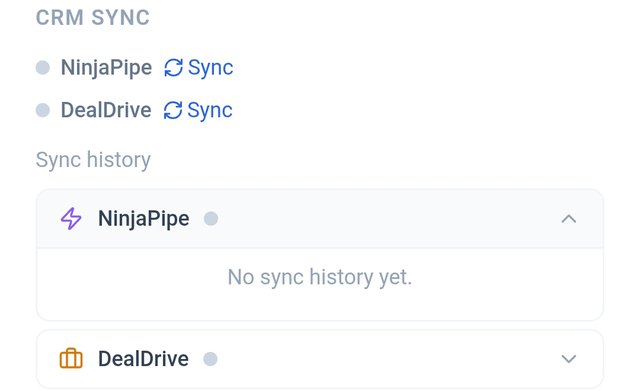
The screenshot above shows the lead data before the CRM sync. This is the useful handoff point: the contact exists, but the context and follow-up responsibility still need to be organized.
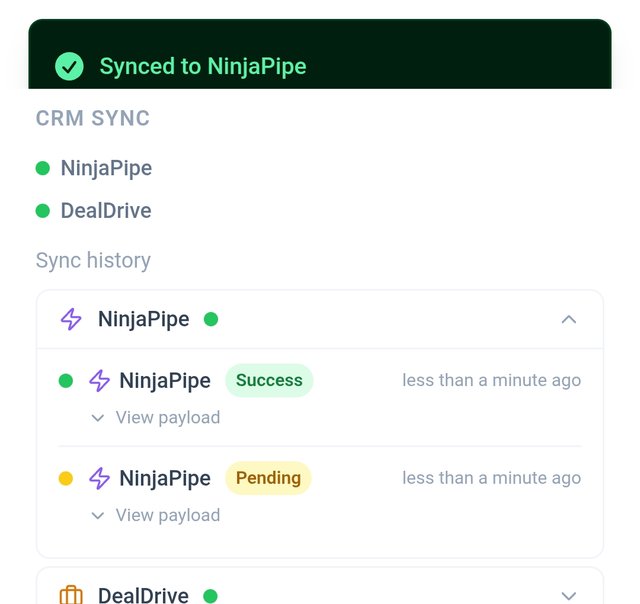
After the sync, the same lead can be connected to the place where you manage follow-up. The CRM should make the next action easier to see, not simply create another database of names. A tool such as My MASH Card can support the capture and handoff, while your CRM remains the place for pipeline ownership and deal progress.
Should you automate networking follow-up?
Automate the repetitive parts, but keep the meaningful parts human. A confirmation, reminder, or task creation can be automated. Your interpretation of what the person said should not be replaced by a generic sequence.
This distinction matters because “automated follow-up” can mean two very different things. In the bad version, everyone receives the same message at the same interval. In the useful version, a contact is tagged by source or interest, a task is created for the right person, and a short reminder helps you send a message with actual context.
If you are comparing tools, Linq, HiHello, Popl, and Blinq all approach digital contact sharing from slightly different angles. Compare the complete workflow, not just the card design. Ask whether the tool helps you capture context, whether it supports the way you share contact information, and whether your team can see what happens after the exchange. A polished profile does not fix a missing follow-up owner.
You can also review should you automate your follow-up after networking before deciding which steps should be automatic and which should stay personal.
What should you say in the second follow-up?
If someone does not respond to your first message, send a short second follow-up that adds value or closes the loop. Do not simply resend the same request.
For example:
Hi Maya, following up once on the referral card example I sent. I also included a short checklist for making introductions easier for clients. If this is not a priority right now, no problem. I can close the loop and reconnect later in the year.
This gives the person an easy way to say not now. It also protects your time. A contact should not remain in an endless “maybe” stage with no next action.
Use a third touch only when there is a strong reason, such as a timely event, a new resource, or a project the person specifically mentioned. The aim is to be remembered as helpful, not persistent for its own sake.
How can you tell whether a networking contact is becoming a client?
Look for evidence of movement, not just engagement. A contact is progressing when they reply with a specific question, introduce another decision-maker, book time, request a proposal, or agree to a defined next step.
Track a few practical measures:
- How many contacts included a useful note and follow-up date
- How many received a personalized first message within 48 hours
- How many moved to a real conversation, proposal, referral, or nurture stage
- Which events and introductions produced the strongest opportunities
You do not need a complicated analytics program at first. A consistent pipeline and clear labels will tell you more than a large contact list. For a deeper look at lead visibility, see how to track digital business card leads and follow up.
What is the simplest networking-to-client workflow?
Start with this five-step process:
- Share your digital business card through a QR code or link.
- Capture a short note about the person and the conversation.
- Send a personal follow-up within 24 to 48 hours.
- Create a CRM record or task only when there is a clear next action.
- Review the pipeline weekly and close, nurture, or reschedule every open contact.
The system should be easy enough to use at a crowded event and clear enough to support you weeks later. If it requires a long form, ten tags, or a complicated sequence, you will stop using it when the room gets busy.
Networking does not need to feel like a numbers game. The people you meet are more likely to become clients when you remember what mattered to them, do what you said you would do, and make the next conversation useful. People buy from people who were helpful before they needed anything, and they can tell the difference between genuine interest and a pitch. That is the real advantage of connecting a digital business card to a disciplined follow-up process: the relationship does not disappear when the event ends.
What should you do?
- Best for
- Service businesses, sales professionals, consultants, founders, and referral partners who need to turn conversations into organized opportunities.
- Use this when
- Use this workflow after networking events, referrals, mixers, conferences, or any conversation where a contact shows a real business need.
- Avoid if
- Avoid collecting names without context, sending generic follow-ups, enrolling every contact in an automated sequence, or leaving next steps unassigned.
- Alternatives
- For light relationship nurturing, use a simple reminder list. For active opportunities, use a CRM pipeline connected to your contact capture process.
Stop letting connections go cold
My MASH Card captures who you meet, remembers the context, and helps you follow up before the opportunity disappears.


